
The Ultimate Guide to AI Agents: Understanding Autonomous Intelligent Systems
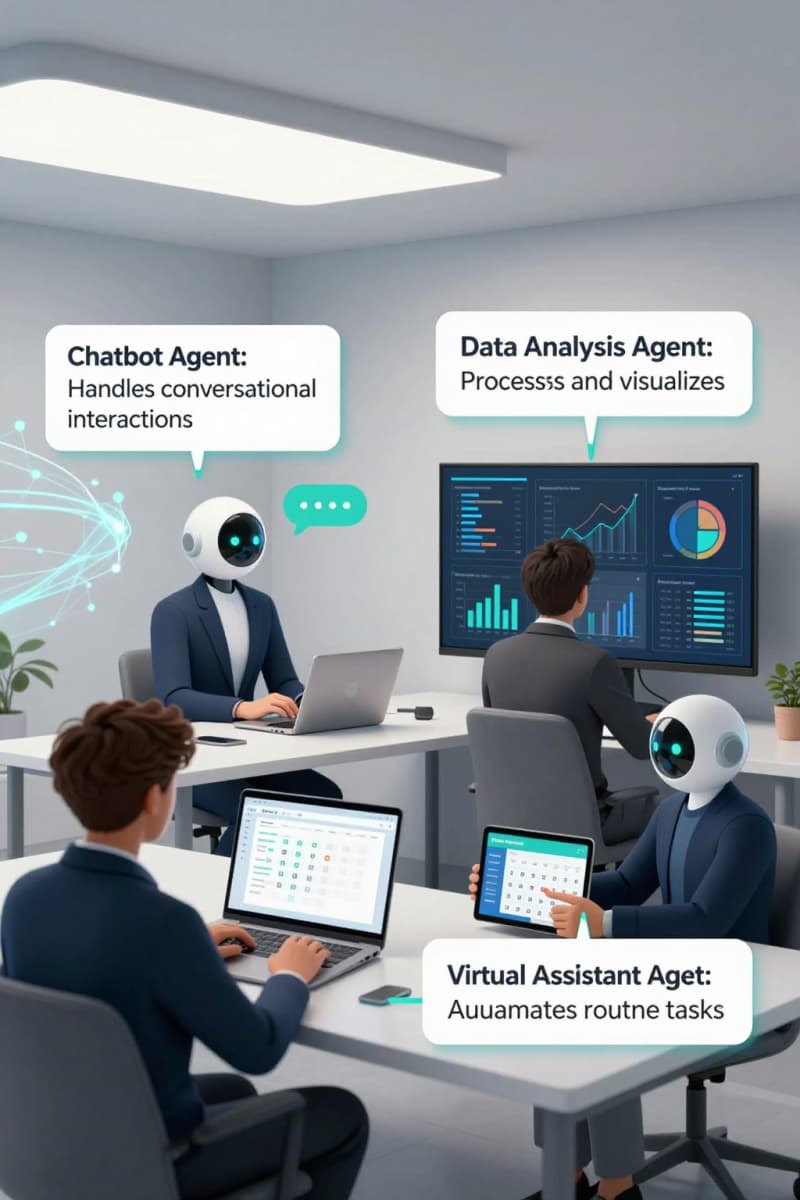
Introduction to AI Agents: The Rise of Autonomous Systems Artificial intelligence has definitely moved beyond just basic automation to these more advanced autonomous systems called AI agents. These agents are designed to perform tasks, make decisions, and pursue goals on their own within changing environments. As more industries adopt AI-powered solutions, having a clear grasp of AI agents—their mechanisms, capabilities, and impacts—is becoming pretty essential for both businesses and tech enthusiasts.
Defining AI Agents: Core Concepts and Principles
AI agents are autonomous software entities or programs that sense their surroundings through inputs or sensors, process that information, and take actions aimed at reaching specific goals. Unlike traditional software that just follows fixed instructions, AI agents show abilities like reasoning, planning, learning, and sometimes even collaboration. Their autonomy lets them work with little human input while adjusting to new situations. This ability to dynamically adapt and operate independently across a variety of domains distinguishes AI agents as fundamentally different from static algorithms or rule-based systems.
How AI Agents Work: Architecture and Decision-Making Processes
At the heart of AI agents lies a complex architecture that combines perception, reasoning, decision-making, and action components. These systems typically gather data from their environment through sensors or APIs, then interpret it using various methods such as machine learning models, symbolic reasoning, or probabilistic inference. Once information is processed, the agent selects the optimal action to pursue its goals based on decision policies, utility calculations, or learned strategies.
Many AI agents incorporate feedback loops that enable continuous learning and adaptation. For example, reinforcement learning allows agents to improve decisions by receiving rewards or penalties from the environment based on their actions. This cyclical improvement mechanism helps agents perform better in uncertain or dynamic contexts over time.
Key Characteristics and Attributes of AI Agents
AI agents have features that really set them apart from simple software or scripted bots. These include autonomy—working without direct human control; adaptability—changing behavior based on new info; social ability—interacting with other agents or humans to coordinate or negotiate; and goal-oriented behavior—constantly working towards set objectives. Their memory and learning capabilities also help them perform better in complex or uncertain situations by considering past experiences or environmental models.
Differentiating AI Agents from Other AI Technologies
It's important to distinguish AI agents from other AI tech like chatbots, traditional AI algorithms, or robotic process automation (RPA). While chatbots often respond to user inputs by following set scripts with limited context understanding, AI agents can independently initiate actions, set and pursue goals, and dynamically adapt behaviors. Traditional AI tools may analyze data or perform well-defined tasks but generally do not possess autonomy or awareness of their operating context. Meanwhile, RPA automates repetitive tasks through predefined rules without learning or adapting.
For example, Google’s Duplex AI agent can autonomously handle phone interactions, making real-time decisions beyond script-following chatbots. Recognizing these differences clarifies why AI agents are suited for more complex, goal-driven roles.
Source: Understanding AI Automation
Classifying AI Agents: Types and Categories
AI agents appear in many forms, ranging from simple reflex agents to complex multi-agent systems:
- Simple reflex agents respond immediately to stimuli without any memory. They use predefined rules triggered by current inputs.
- Model-based agents maintain internal representations or models of their environment to make informed decisions and plan future actions.
- Goal-based agents evaluate various possible actions considering desired goals, choosing behaviors that fulfill specific objectives.
- Utility-based agents go further by maximizing a utility function, balancing trade-offs and preferences to select the best course.
- Multi-agent systems consist of multiple interacting agents that may cooperate or compete, commonly employed in simulations, distributed problem-solving, or market ecosystems.
Understanding these types helps identify appropriate AI agent designs for differing tasks or industries.
Real-World Applications and Examples of AI Agents
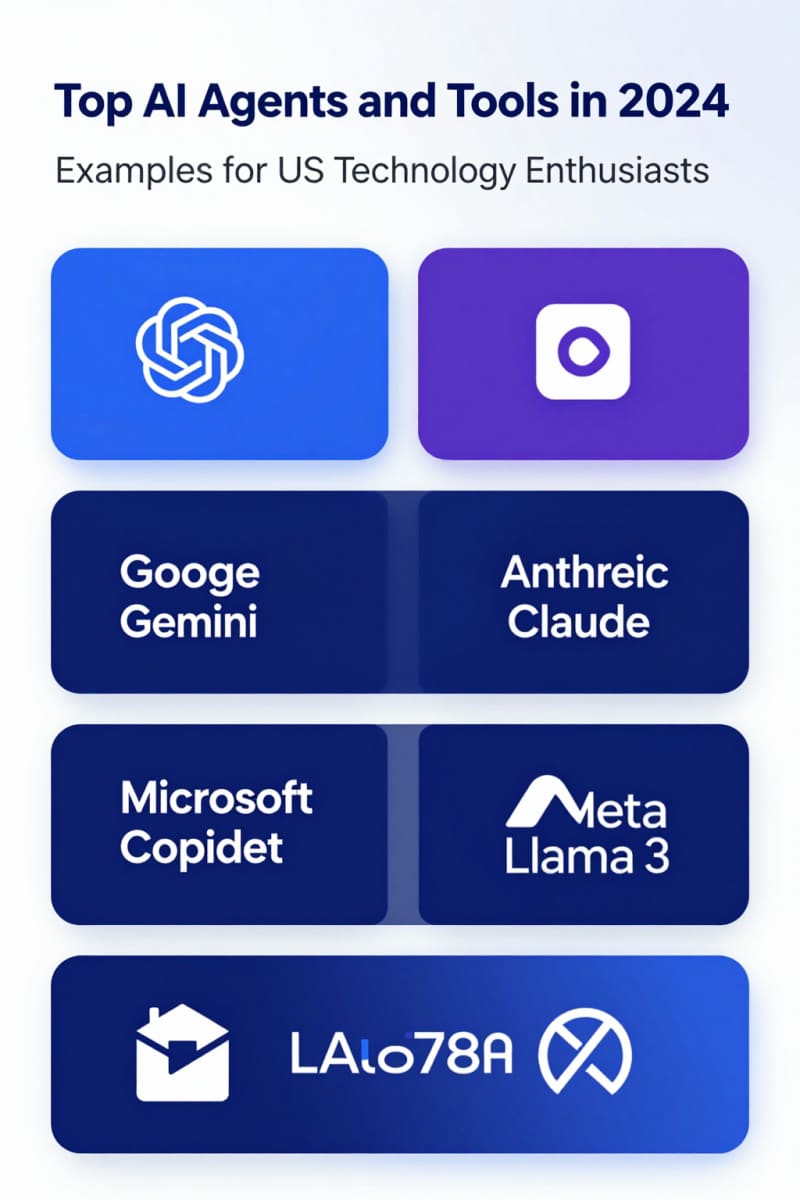
AI agents are transforming many fields by automating processes, aiding decision-making, and enhancing customer interactions. Examples include OpenAI’s Codex agents that assist with coding by understanding and generating programming instructions, Google’s Duplex which holds human-like phone conversations autonomously to schedule appointments, and Microsoft’s AI-powered virtual assistants integrated in enterprise software to streamline workflows.
In logistics, AI agents optimize routing by dynamically analyzing traffic and delivery constraints, reducing costs and improving efficiency. Inventory management agents forecast demand and adjust stock levels autonomously.
In finance, agents detect fraudulent activities by monitoring transaction patterns in real-time and provide personalized investment advice based on individual risk profiles.
Healthcare applications include AI agents that assist in diagnostics by aggregating patient data and suggesting probable conditions, or agents coordinating patient scheduling and resource allocation.
Education benefits from intelligent tutoring systems—AI agents that adapt teaching strategies based on student performance and engagement.
Such diverse applications demonstrate the broad impact and versatility of AI agents.
The Business Impact and Future Landscape of AI Agents
Integrating AI agents into business results in improved operational efficiency, cost savings, and new services. Organizations leveraging AI agents can achieve smarter automation and data-driven decision-making at scale.
Emerging trends include greater collaboration between AI agents and humans, focusing on augmenting human capabilities rather than replacing them. Simultaneously, increased attention on ethical AI involves developing trustworthy agents with explainable reasoning and ensuring compliance with legal and societal norms.
Leading companies like OpenAI, Google, and Microsoft continue advancing AI agents’ capabilities, addressing challenges around transparency, fairness, and safety.
Staying informed about these developments allows businesses to strategically adopt AI agents that align with their goals and values.
Conclusion: Navigating the Era of Autonomous AI
AI agents represent a big leap forward in artificial intelligence, enabling smart, independent decision-making across many areas. Learning about their principles, how they function, their types, and their real-life uses helps people and organizations unlock their full potential. Resources like Agents Manual offer useful info and tools to dive deeper into these topics, letting users make informed choices in the quickly evolving AI landscape (https://www.agentsmanual.com/). As AI agents keep advancing, they’re set to reshape industries, workflows, and the way humans and machines collaborate in really meaningful ways.
FAQ
Q: How are AI agents different from traditional AI software?
A: Traditional AI software typically performs predefined tasks or analyzes data but does not operate autonomously or adapt dynamically. AI agents sense their environment, make independent decisions, and learn over time.
Q: Can an AI agent handle unexpected situations?
A: Yes, many AI agents include mechanisms like feedback loops and learning algorithms (e.g., reinforcement learning) that enable them to adapt to new or changing conditions beyond their original programming.
Q: Are all chatbots AI agents?
A: No, most chatbots follow scripted interactions without autonomy or goal-driven decision-making. Some advanced chatbots integrated with AI agent frameworks may possess more autonomous features, but generally, chatbots are simpler than AI agents.