
AI Automation Across Industries: Applications, Impact, and Business Value

Artificial Intelligence (AI) automation has undeniably evolved well beyond just being a set of simple productivity tools. Today, it stands as a truly strategic asset, profoundly influencing and benefiting a diverse range of industries. From complex legal services to the intricate world of software development, the precision of robotics, the foresight of predictive maintenance, and the constant demands of IT operations, AI automation is reshaping how businesses function, innovate, and ultimately thrive. To harness these powerful technologies effectively and gain a competitive edge in our fast-changing marketplace, organizations need a deep understanding of AI automation’s specific applications and its wide-reaching impacts across various sectors.
Understanding the Core Principles of AI Automation
At its heart, AI automation involves the strategic use of advanced algorithms, sophisticated machine learning models, and various cognitive technologies that aim to replicate or augment human reasoning and decision-making processes. These tools perform tasks that have traditionally required human intelligence, intuition, and manual effort. This covers a wide range of activities—from quickly processing vast datasets and spotting subtle patterns to making complex decisions and solving intricate problems on the fly. AI automation encompasses capabilities such as pattern recognition, natural language understanding, and predictive analytics.
AI automation has several key traits. First, its adaptability allows systems to adjust and respond dynamically to changing conditions, inputs, and environments without explicit reprogramming. Second, its capacity to continuously learn from new data through techniques like reinforcement learning and deep learning means the systems become smarter and more effective over time. Third, and perhaps most importantly, it can automate repetitive, routine, or rule-based activities by encoding and executing business logic at scale and speed. Freeing humans from these mundane tasks allows professionals to focus their valuable time, creativity, and problem-solving skills on higher-value work, strategic planning, and sparking innovation, transforming their roles and significantly boosting overall productivity.
Transforming Industries: AI Automation in Action
AI Automation in the Legal Sector
The legal field, traditionally dominated by manual review and exhaustive research, is undergoing significant transformation driven by AI automation. Law firms and corporate legal teams predominantly leverage AI for time-intensive tasks such as document review, case law research, and contract analysis. Tools powered by advanced Natural Language Processing (NLP), a subset of AI that enables machines to understand and interpret human language, are leading this change.
These systems can automatically scan enormous collections of legal documents, including discovery materials in litigation, complex contracts, and extensive patent databases, to quickly identify relevant clauses, uncover potential risks, highlight compliance issues, and extract critical information. This capability drastically reduces the time and costs typically associated with manual document review, allowing legal professionals to accelerate case workflows and concentrate on strategic decision-making rather than data sifting. Moreover, sophisticated AI models use predictive analytics to estimate case outcomes by analyzing large databases of past judicial rulings, precedent cases, and litigant behavior patterns, providing lawyers with valuable strategic insights.
AI further aids in conducting patent searches by efficiently filtering through millions of records to find relevant prior art, an otherwise painstaking manual task. Firms adopting AI automation in legal processes report significant productivity gains, improved accuracy, and enhanced capability for data-driven counsel.
Enhancing Software Development with AI Automation
In software development, AI automation enhances efficiency and quality across many stages of the development lifecycle, including initial coding, debugging, testing, and deployment. Modern Integrated Development Environments (IDEs) often include AI-assisted coding features such as code completion and function suggestion. These tools analyze the developer's context and historical coding patterns to predict entire code segments, accelerating development and reducing syntactic and logical errors.
AI-powered testing tools utilize machine learning to identify software defects, generate comprehensive test coverage, and simulate real-world user scenarios, which reduces the need for extensive manual testing and leads to higher quality software releases. Additionally, AI-driven project management tools analyze historical project data, team performance metrics, and task dependencies to forecast development timelines and resource demands more accurately, helping teams minimize bottlenecks and optimize workflows.
Collectively, these AI applications decrease human error, expedite release cycles, and facilitate continuous integration and continuous deployment (CI/CD) practices, enabling more frequent and reliable software updates.
AI in Robotics and Manufacturing
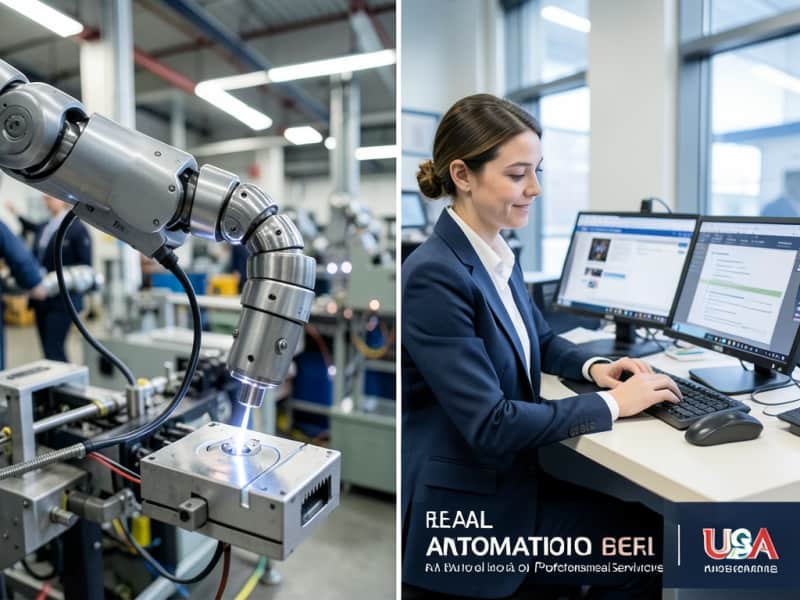
The integration of AI with robotics is transformative for manufacturing, enabling machines to perform complex tasks requiring adaptability, precision, and autonomy. AI-powered robots execute delicate assembly processes, conduct high-accuracy quality inspections using advanced machine vision systems capable of detecting microscopic defects, and manage efficient packaging operations.
A defining feature of these robots is their ability to adapt to subtle variations in products, materials, or environmental conditions by employing sensory feedback and machine vision. For example, an AI-driven robotic arm can recognize a slightly misaligned component and autonomously adjust its grip and placement, surpassing the rigid constraints of traditional programmable robots. Predictive AI algorithms optimize production schedules, inventory levels, and machine configurations, leading to improved operational efficiency and energy savings.
A prominent development is the rise of collaborative robots, or "cobots," designed to work safely alongside human operators, combining robotic precision and strength with human judgment and dexterity. These advances reduce operational costs, increase throughput, enhance product quality, and contribute to safer factory environments.

Predictive Maintenance through AI
Maintaining complex equipment and industrial facilities is challenging, but AI automation, especially via predictive analytics, offers a paradigm shift. Traditional maintenance strategies were either reactive—fixing equipment after failure—or scheduled at fixed intervals without regard for actual wear. AI leverages real-time sensor data streams such as vibration, temperature, pressure, acoustic signals, and electrical currents, combined with historical maintenance records and environmental conditions, to detect early signs of deterioration.
By recognizing subtle anomalies and degradation patterns before a failure occurs, AI systems forecast breakdowns and recommend maintenance during planned downtime. This proactive approach reduces unexpected outages, lowers emergency repair costs, extends equipment lifespan, and enhances overall operational reliability. Industries such as aerospace, energy, and manufacturing benefit substantially from integrating predictive maintenance, resulting in minimized disruptions and optimized asset utilization.
Optimizing IT Operations with AI Tools
The complexity and criticality of IT operations necessitate continuous monitoring and rapid problem resolution. AI tools are increasingly deployed in IT operations to enhance monitoring, security, and incident management. AI-driven monitoring platforms detect anomalies in server performance, unusual network activity, and potential cybersecurity threats far faster than conventional methods.
These systems can automatically resolve minor issues or prioritize and escalate significant incidents with comprehensive diagnostic information. Chatbots and virtual assistants handle routine user support queries and guide troubleshooting, thereby reducing the load on IT personnel and enabling them to address more complex problems. Furthermore, AI improves patch management by identifying vulnerabilities, prioritizing updates based on risk analysis, and automating deployment across diverse environments, enhancing security compliance and system stability.
Overall, AI enhances system reliability, accelerates incident response, and optimizes resource allocation by automating repetitive administrative tasks.
Key Benefits of Implementing AI Automation for Business
Organizations that integrate AI automation strategically realize numerous benefits underpinning growth and competitive advantage. Operational efficiency increases substantially as both routine and sophisticated tasks are executed swiftly and with greater consistency, reducing the frequency and cost of human errors. Optimized resource utilization emerges from freeing human workers to focus on creative and strategic activities while machines handle standardized tasks.
Faster turnaround times enable businesses to respond promptly to market shifts and evolving customer demands, often resulting in improved customer satisfaction through streamlined service and support. Additionally, AI empowers organizations to innovate rapidly by extracting actionable insights from data, identifying new market opportunities, refining product development, and enhancing strategic planning. Combined, these gains contribute to a sustainable competitive edge and long-term success in a digitized economy.
Challenges and Considerations in Adopting AI Automation
Despite its advantages, implementing AI automation involves several challenges. Quality and availability of data remain paramount, as AI models depend heavily on large volumes of accurate, relevant, and unbiased data. Inadequate data can lead to flawed predictions, perpetuation of biases, and ultimately project failure. Addressing data silos, ensuring data governance, and establishing rigorous validation processes are essential steps.
Ethical considerations, privacy, and regulatory compliance are critical, particularly with emerging frameworks like the General Data Protection Regulation (GDPR) and the California Consumer Privacy Act (CCPA). Organizations must mitigate algorithmic bias to ensure fairness, maintain transparency regarding AI decision processes, and protect sensitive information conscientiously.
The workforce impact demands careful management. While AI can automate certain jobs, it also creates opportunities for upskilling and new roles focused on AI oversight and collaboration. Proactive change management—incorporating training, communication, and inclusive planning—helps transition human teams effectively alongside AI systems.
Lastly, understanding AI’s limitations is vital. While AI excels in processing data and automating defined tasks, it may lack nuanced human judgment, creativity, or context comprehension required in novel or ambiguous situations. Setting realistic expectations avoids overdependence and maximizes technology benefits.
Future Trends: The Evolving Landscape of AI Automation
The AI automation landscape is rapidly evolving, with emerging trends reshaping its industrial impact. Integration of AI with Internet of Things (IoT) devices promises fully connected, self-optimizing environments such as smart factories where equipment autonomously monitors health and adjusts operations in real-time, smart cities managing resource distribution and traffic flow, and healthcare systems offering personalized, predictive care.
Explainable AI (XAI) is gaining importance as AI complexity grows. XAI enhances transparency by making AI decision-making processes understandable to humans — critical in regulated sectors like healthcare, finance, and law. This fosters trust, facilitates auditing, and supports ethical AI governance.
Expanding adoption into traditionally less digitized sectors such as construction, agriculture, and creative industries reflects improved usability and customization of AI tools. Advances in natural language understanding and generative AI extend automation to creative and cognitive domains, enabling automated content creation, AI-driven design simulations, strategic planning assistance, and personalized customer interactions.
Choosing the Right AI Tools for Your Automation Needs
Selecting appropriate AI automation tools requires strategic alignment with business goals and operational realities. A one-size-fits-all approach does not apply; instead, tools should be carefully evaluated for industry relevance, scalability to accommodate growth and data volume increases, and seamless integration with existing IT infrastructure to prevent data silos and workflow disruptions.
Robust vendor support including training, software updates, and technical maintenance is critical for sustainability. Usability for teams, proven performance backed by case studies, and alignment with organizational strategy ensure successful deployment. Consulting trusted industry resources and learning from real-world implementations can guide informed decision-making.
Conclusion
In conclusion, AI automation is a powerful, transformative force reshaping industries worldwide. By smartly automating complex tasks, improving decision-making, and sparking ongoing innovation, AI is heralding a new era of business operations. Organizations that adopt AI automation in key areas—legal services, software development, advanced robotics, predictive maintenance, or IT operations—are not merely keeping pace but setting themselves up for enhanced performance, cost efficiency, and enduring competitiveness in an increasingly digital and automated world. The opportunity to leverage this technology for substantial, positive business impact is vast and accelerating.
Key Takeaways
- AI automation is transforming multiple industries by improving efficiency, accuracy, and innovation.
- Core AI capabilities include adaptability, continuous learning, and automation of routine tasks.
- Legal, software development, manufacturing, predictive maintenance, and IT operations benefit significantly from AI applications.
- Strategic implementation of AI automation drives operational excellence, faster turnaround, and sustained competitive advantage.
- Challenges include data quality, ethical concerns, workforce impact, and understanding AI limitations.
- Emerging trends feature IoT integration, explainable AI, and expansion into new sectors.
- Choosing the right AI tools requires alignment with business goals, scalability, and vendor support.