
AI Automation: Navigating the Next Era of Efficiency and Transformation

In our increasingly digital and fast-paced world, the fundamental idea of automation isn't exactly new or revolutionary by itself. For many decades, different types of machines and software have been key in handling repetitive tasks, helping boost productivity across many industries and sectors. But the advanced and widespread use of Artificial Intelligence (AI) has really brought about a deep and transformative change.
What Exactly is AI Automation? Defining the Core Technologies at Play
AI automation basically means applying various AI technologies strategically to automate processes that used to need human intelligence, judgment, and thinking skills. What sets AI automation apart from older, traditional automation is that it uses advanced cognitive abilities to handle tasks that are naturally more complex, highly changeable, and often involve unstructured or semi-structured data. This marks a major jump from the strict, rule-based systems of older automation. The main technologies driving this evolution are:
Machine Learning (ML): At its core, ML means algorithms that let computer systems learn straight from huge amounts of data, find detailed and often hidden patterns, and then make informed predictions or decisions on their own without needing step-by-step programming for every possible case. This ability lets systems keep improving their performance, get more accurate, and become smarter as they process more data and 'gain experience.' It's like teaching a system to recognize a spam email by showing it thousands of examples of both spam and legitimate emails, allowing it to learn the distinguishing features, rather than writing explicit rules for every possible spam characteristic.
Natural Language Processing (NLP): This is a specialized, fast-growing branch of AI that gives computers the amazing ability to understand, interpret, and create human language in both written and spoken forms. NLP is key for automating tasks that rely a lot on text or speech, like smart customer service chatbots that can grasp informal, nuanced questions, virtual assistants that respond based on context, or advanced tools that analyze documents extracting important info and sentiment from contracts, reports, or emails. It lets machines communicate and understand like humans do, enabling sentiment analysis of customer feedback or automatic summarization of lengthy legal documents.
Robotic Process Automation (RPA): RPA tools themselves aren’t inherently AI (they usually follow set, rule-based instructions to mimic human clicks and keystrokes), but they’re designed to automate very repetitive, routine digital tasks by copying how humans interact with software interfaces. When RPA is combined strategically with AI like ML and NLP, it transforms into what's called "intelligent automation" or "cognitive automation." This kind of automation can handle exceptions to rules, process and understand unstructured data, and make more subtle, cognitive decisions beyond simple rule-following. It essentially bridges the gap between predictable, structured processes and complex, dynamic ones by adding a layer of intelligent decision-making to robotic execution.
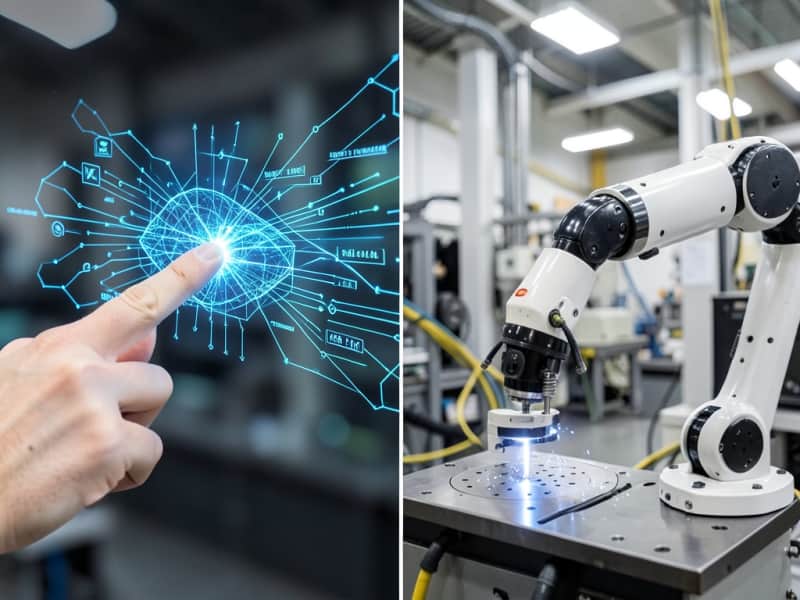
Beyond Routine Tasks: How AI Significantly Enhances Automation Capabilities
The real power and revolutionary promise of AI automation come from its ability to go beyond just simple, repetitive jobs. AI adds an essential layer of intelligence, allowing these systems to perform tasks that we would traditionally consider to require human thought and judgment. This significant upgrade means automated systems can:
Learn and Adapt Continuously: Thanks to built-in Machine Learning, AI-powered systems keep learning from new data, user interactions, and changing conditions like market shifts or customer feedback. So, they can improve themselves, fine-tune decisions, and adjust to new demands or unexpected events without needing humans to reprogram them constantly. They don’t just execute tasks; they evolve and become smarter over time, much like how humans gain expertise through experience.
Process Unstructured Data with Deep Understanding: With Natural Language Processing and other advanced AI techniques, AI automation can move far beyond the limitations of structured data (like entries in a database). It can interpret and extract valuable insights from all sorts of unstructured information—such as the free-form text in customer service emails, the emotional tone in voice recordings from call centers, the informal language used on social media, the complex jargon in legal contracts, or the context within market research reports. This capability opens up automation to a vast array of new processes that older, rule-based systems simply could not handle.
Make Cognitive, Data-Driven Decisions: AI can analyze massive amounts of complex data extremely quickly, identifying intricate patterns, correlations, and causal relationships that might be difficult or impossible for humans to spot easily or within a practical timeframe. Based on these insights, AI can predict future outcomes, offer intelligent recommendations, and even make autonomous decisions using logical reasoning and statistical models. This transforms automation from merely executing commands to actively contributing to strategic planning and operational optimization.
Handle Exceptions and Anomalies Gracefully: Intelligent automation systems are designed to identify unusual cases or steps that deviate from the standard process flow. Instead of halting or failing when encountering an unexpected situation (as older automation might), AI systems can attempt to resolve these issues autonomously based on learned patterns, or intelligently flag them for human review with relevant contextual information. This reduces workflow disruptions, enhances process reliability, and maintains operational continuity.
Key Benefits of Implementing AI Automation in Business
AI automation delivers a multitude of powerful, game-changing benefits that can profoundly impact businesses of all sizes and across all sectors. These advantages extend well beyond mere cost savings, touching upon strategic growth, competitive positioning, and operational agility:
Enhanced Efficiency and Productivity: By automating mundane, repetitive, and time-consuming tasks that previously consumed significant human hours, AI automation liberates employees. This allows human workers to redirect their efforts toward higher-value activities that demand creativity, critical thinking, strategic problem-solving, emotional intelligence, and complex interpersonal skills. The resultant effect is a substantial boost in overall productivity and a more engaged, motivated workforce.
Significant Cost Reduction: Streamlining operational workflows, minimizing costly manual errors (such as rework or compliance oversights), and optimizing resource allocation (across energy, materials, and human capital) contribute to substantial and sustainable cost savings for businesses. These savings stem from reduced manual labor requirements, fewer instances of error correction, and more efficient utilization of available resources.
Improved Accuracy and Consistent Quality: AI systems are not susceptible to fatigue, distraction, or the inherent variability that can affect human performance, especially over extended periods. This leads to consistently high levels of quality and precision, whether in data entry, manufacturing quality control, or adherence to regulatory compliance standards. The outcome is fewer product defects, superior output quality, and enhanced operational reliability.

Unprecedented Scalability and Agility: Automated processes can be rapidly scaled up or down to accommodate fluctuating demand, seasonal variations, or shifts in business volume—without the usual logistical challenges associated with hiring, training, or managing a large workforce. This provides unparalleled flexibility and responsiveness, capabilities that are difficult to achieve with purely manual operations.
Faster and More Informed Decision-Making: AI possesses the capacity to analyze vast and complex datasets drawn from multiple sources in real-time. It can identify subtle patterns and interdependencies far more rapidly than human analysts. This provides business leaders with deep, actionable insights, enabling them to make quicker and more strategic decisions, thereby securing a crucial advantage in today's rapidly evolving marketplace.
Superior Customer Experience: AI-driven chatbots and intelligent virtual assistants offer immediate, round-the-clock support. They can efficiently handle routine inquiries, guide users through processes, and resolve common issues autonomously. This prompt and dependable assistance enhances customer satisfaction and loyalty, while simultaneously freeing up human support agents to address more complex or emotionally nuanced customer interactions.
Addressing the Challenges: Ethical Considerations and Implementation Hurdles
Despite the undeniable benefits, the widespread adoption of AI automation is accompanied by significant challenges and critical considerations. Ethical concerns, in particular, are paramount, especially regarding data privacy (adhering to regulations like GDPR in Europe or CCPA in California), the potential for algorithmic bias, and the imperative for transparent, explainable AI decisions. If the data used to train AI models contains inherent biases—often reflecting historical societal discrimination—the AI may unintentionally perpetuate or even amplify existing social inequalities. Therefore, it is crucial to develop and deploy AI responsibly, guided by robust ethical frameworks and continuous oversight.
Implementation itself presents numerous complexities. A substantial upfront investment is often required, encompassing not only the technological infrastructure and software but also the recruitment and retention of skilled personnel capable of building, deploying, and managing these sophisticated systems. Seamlessly integrating new AI solutions with existing legacy systems, maintaining high data quality, and navigating the significant organizational changes that AI introduces all necessitate meticulous planning, strong leadership, and clear, consistent communication. Furthermore, addressing the human element—which includes retraining the workforce, alleviating anxieties surrounding job displacement, and fostering a corporate culture that embraces collaboration between humans and AI—is equally vital for successful adoption.
AI Automation Across Industries: Real-World Applications and Case Studies
AI automation is no longer confined to the realms of high-tech corporations or research laboratories; its transformative impact is already being felt across a diverse array of industries globally. Here are several illustrative examples:
Legal Sector: Traditionally characterized by labor-intensive manual processes such as document review and extensive research, the legal field is undergoing a significant metamorphosis driven by AI. AI tools dramatically accelerate legal research by rapidly scanning massive databases, automate tedious document analysis for processes like litigation e-discovery, and precisely analyze complex contractual language. They can identify relevant legal precedents, flag potential risks or inconsistencies, and streamline due diligence efforts, thereby substantially reducing both time and costs. This allows legal professionals to dedicate more of their expertise to strategic thinking and direct client engagement.
Information Technology (IT) Operations: Within IT departments, AI automation, often referred to as AIOps, is widely employed for predictive maintenance and proactive issue resolution, aiming to fix problems before they lead to service disruptions. AI analyzes vast streams of system logs, network traffic data, and error reports to detect anomalies and potential issues at their earliest stages. It also streamlines incident management, automates routine software testing procedures, and enhances cybersecurity defenses by identifying emerging threats and unusual network activities in real-time, often triggering automated responses to mitigate risk.
Engineering and Manufacturing: AI assists engineers in optimizing product designs through generative design techniques, conducting faster and more comprehensive simulations, and enhancing quality control on production lines using computer vision and predictive analytics. Predictive maintenance algorithms applied to machinery can significantly reduce downtime, extend the operational lifespan of equipment, and fine-tune production schedules for leaner, more reliable manufacturing operations.
Energy Sector: AI plays a crucial role in enabling the energy industry to achieve new benchmarks in efficiency and sustainability. Algorithms are used to optimize power grid operations, forecast energy demand by analyzing historical and real-time consumption data, and improve the management of renewable energy sources like solar and wind power. By analyzing weather patterns, consumption data, and market prices, AI systems can help reduce energy waste, maintain grid stability, and facilitate the transition to cleaner energy sources.
Financial Services: In the financial sector, AI automation is indispensable for advanced fraud detection. It scrutinizes billions of transactions in real-time, identifying suspicious patterns with exceptional accuracy, often preventing fraudulent activities before they are completed. AI also powers sophisticated trading strategies, automates compliance checks to meet stringent regulatory requirements (such as Anti-Money Laundering (AML) and Know Your Customer (KYC) protocols), and enhances customer service through intelligent virtual assistants that can handle a high volume of inquiries quickly and often with a personalized touch.
Navigating the Future of Work: AI Automation's Impact on Jobs and Skill Sets
One of the most widely discussed aspects of AI automation is its potential impact on employment. While concerns about job displacement are certainly understandable, a more nuanced and increasingly accepted perspective suggests a significant transformation and redefinition of roles rather than wholesale elimination. The reality is more complex, dynamic, and characterized by collaboration:
Job Transformation and Augmentation: Many tasks that were previously manual and data-intensive are now being automated. However, this automation often frees human workers to concentrate on aspects of their jobs that require uniquely human capabilities, such as creativity, critical thinking, complex problem-solving, strategic planning, nuanced communication, and emotional intelligence. This fosters a powerful human-AI partnership, where AI handles the more routine and analytical components, while humans focus on strategy, innovation, ethical considerations, and interpersonal interactions.
Creation of Entirely New Job Categories: Concurrently, the rise of AI is giving birth to entirely new professions and specializations that did not exist previously. These include roles like AI trainers (who help "teach" AI models), prompt engineers (who craft precise instructions for AI), AI ethicists (ensuring responsible AI deployment), data scientists specializing in AI, machine learning engineers who build and refine AI algorithms, and AI integration specialists who bridge the gap between AI capabilities and business needs. These emerging roles demand specialized expertise in the development, management, and governance of AI systems.
The Imperative of Upskilling and Reskilling: For the contemporary workforce, continuous learning and adaptability are no longer optional but essential for remaining relevant in an AI-driven economy. Businesses, educational institutions, and governments must invest significantly in comprehensive training programs. These programs should focus on developing new skill sets, including proficiency in utilizing AI tools, advanced data analysis techniques, effective digital collaboration, and strengthening human-centric abilities like creativity, empathy, and complex problem-solving. This commitment to lifelong learning is crucial for enabling individuals to work effectively alongside AI and to thrive amidst ongoing technological change.
Investment Opportunities in the AI Automation Sector
The rapid expansion of AI automation presents a fertile and dynamic landscape for investors, spanning numerous interconnected domains. Savvy investors are actively seeking companies that are not only at the forefront of AI innovation but also demonstrate clear pathways to product commercialization and successful integration into real-world business workflows, aiming for substantial returns:
Core AI Technology Providers: This category includes companies developing the fundamental building blocks of AI. They encompass manufacturers of AI-specific chips and hardware (such as NVIDIA, AMD, and Intel), providers of cloud-based AI platforms and essential infrastructure (like Google Cloud AI, AWS AI, and Microsoft Azure AI), and developers of advanced Machine Learning and Natural Language Processing frameworks and foundational models (such as OpenAI and Anthropic).
Industry-Specific AI Solutions: Another rapidly growing segment comprises firms dedicated to creating specialized AI automation solutions tailored for particular industries, leveraging deep domain expertise. Examples include AI-powered legal technology for contract analysis, advanced diagnostic and drug discovery tools for healthcare, intelligent automation for smart manufacturing and logistics, and AI-driven fraud detection and personalized wealth management platforms in finance. These companies offer significant vertical market value and address specific industry pain points.
AI-Powered Software-as-a-Service (SaaS): This vibrant segment features companies that deliver AI automation tools and capabilities through subscription-based online software platforms. This includes intelligent Robotic Process Automation (RPA) solutions, AI-enhanced customer service platforms, marketing tools leveraging AI for content generation and personalization, and advanced AI-driven data analysis and business intelligence tools. The SaaS model often provides scalable and predictable revenue streams, which are highly attractive to investors.
Ethical AI and Explainable AI (XAI): As regulatory frameworks mature globally (e.g., the EU AI Act) and societal concerns regarding AI bias, fairness, transparency, and trustworthiness intensify, companies focusing on developing and implementing responsible, clear, and unbiased AI systems are poised for significant growth. Investments in AI governance tools, audit mechanisms, explainability technologies (demonstrating how AI reaches its conclusions), and robust compliance solutions are becoming increasingly critical.
The Road Ahead: Emerging Trends and the Future of AI-Driven Automation
The trajectory of AI automation points toward a future characterized by even greater integration, sophistication, and ubiquitous presence—where intelligent systems become indispensable components of both daily life and complex business operations. Several key trends are actively shaping this evolving landscape:
Hyperautomation: This represents an advanced approach that combines AI, Machine Learning, Robotic Process Automation (RPA), process mining, low-code/no-code development platforms, and other cutting-edge technologies to automate as many business and IT processes as feasible. The ultimate objective is to establish highly resilient, adaptive, and efficient end-to-end enterprise operations, extending automation beyond discrete tasks to encompass the management of entire business workflows.
Composable AI: The development of AI is increasingly moving towards a modular, building-block approach, where AI capabilities are designed as reusable components. This composable architecture enables organizations to deploy AI solutions more rapidly, with enhanced flexibility and adaptability to meet specific requirements or respond to dynamic market conditions. It fosters a more agile and scalable AI development process, moving away from monolithic systems towards flexible integration of AI functionalities as needed.
AI at the Edge: This trend involves decentralizing AI processing, bringing computational power closer to the source of data generation (such as IoT devices, sensors, or local servers) rather than relying solely on centralized cloud systems. Edge AI facilitates faster, more secure, and efficient real-time automation by reducing latency and bandwidth requirements, thereby enhancing data privacy and enabling critical applications like autonomous vehicles, smart factory operations, and remote environmental monitoring.
More Sophisticated Human-AI Collaboration: In the near future, AI systems are expected to evolve beyond simply automating tasks to engaging in more intricate and collaborative partnerships with humans. They will function as intelligent co-pilots, advanced assistants, or strategic advisors, providing context, data-driven insights, and proactive recommendations to support human decision-making. This paradigm shift emphasizes creating a synergistic human-AI team, leading to a truly augmented workforce.
Responsible AI Development and Governance: As AI technologies become more pervasive and their societal impact deepens, there will be an escalating focus on establishing robust ethical guidelines, implementing effective regulatory frameworks (such as the EU AI Act), and adhering to core principles of fairness, accountability, transparency, safety, and privacy. This commitment to responsible AI development is fundamental to building public trust, mitigating potential risks, and ensuring that AI technologies ultimately serve the broader benefit of society.
Conclusion: Harnessing AI Automation for Sustainable Growth and a Brighter Future
AI automation represents far more than a transient technological trend; it signifies a fundamental paradigm shift that is redefining efficiency, productivity, and the very nature of work. While it understandably elicits concerns regarding job security and broader societal implications, it simultaneously unlocks immense opportunities for innovation, economic growth, and the enhancement of human potential when approached thoughtfully, ethically, and strategically. By cultivating a deep understanding of the core technologies, fostering a culture of continuous learning and adaptability, and making informed, responsible choices in both development and deployment, businesses and individuals can effectively leverage the vast power of AI automation. This proactive engagement is key to building a future that is not only more productive and efficient but also more equitable, sustainable, and prosperous for all. We are only at the nascent stages of this transformative era of AI-driven automation, and its profound and far-reaching impact is poised to unfold significantly over the coming years.