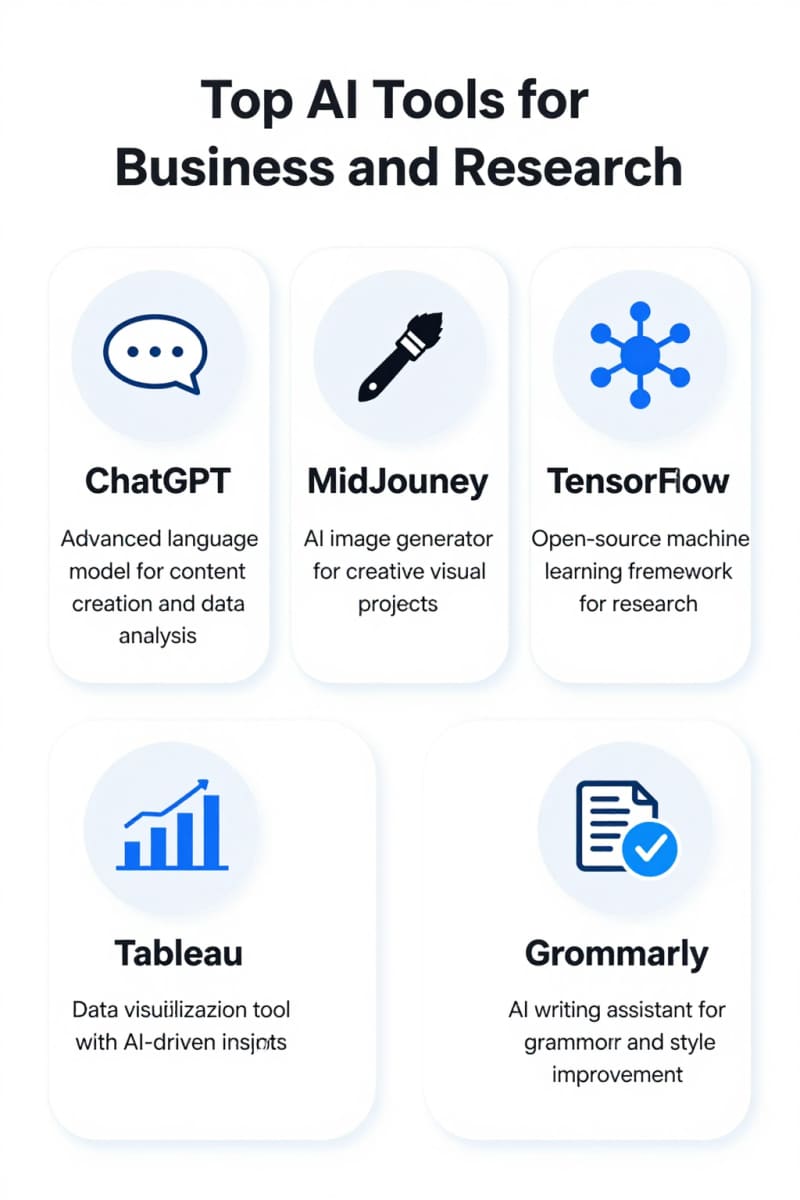
Discover the Best AI Tools from 2024 to 2026 by Use Case
Best AI Tools in 2024-2026: A Comprehensive Guide to Top AI Solutions by Use Case
Introduction: Navigating the AI Landscape in 2024-2026 The fast-paced development of AI tools has really changed how professionals and businesses handle tasks across different industries. From automation to content creation, the growing variety of AI solutions makes it key to understand their uses and capabilities—especially as the market expands between 2024 and 2026. This guide gives a detailed look at top AI tools sorted by use case, helping users from intermediate to advanced levels make better choices based on practical criteria.
Understanding Different Types of AI Tools and Their Core Functions
AI tools cover a wide range of jobs and functions.
Many use machine learning, natural language processing, or computer vision to make complex tasks simpler. Knowing whether a tool is meant for productivity, marketing, research, or specific industries is important for using it well. Additionally, understanding the underlying technology—such as supervised versus unsupervised learning, or rule-based systems versus deep neural networks—can help in selecting the right AI tool for particular challenges.
Top Generative AI Chatbots and Language Models
Generative AI chatbots and language models like ChatGPT, Gemini, and Claude have driven most of the recent progress in AI communication.
ChatGPT is popular for its smooth conversational skills and broad uses, like content drafting and automating customer service. Gemini, which supports both text and images with its multimodal features, boosts creative workflows by allowing users to combine visual and textual inputs seamlessly. Claude aims to provide safer, more controllable outputs, which fits well in enterprise settings focused on compliance. Although these platforms shine at natural dialogue and covering a lot of knowledge, they sometimes struggle with very specialized or extremely current info, since training data can lag behind recent developments. For example, no current generative AI perfectly replaces expert domain knowledge, making human review essential especially in high-stakes contexts.
AI Tools for Enhanced Productivity and Automation
Automation tools that help streamline workflows can really cut down time spent on repetitive tasks.
Platforms like n8n and Zapier stand out as they let users connect different apps without needing to code, enabling integration across diverse systems. Tools for meeting summaries such as Otter.ai offer real-time transcription and pull out key highlights, which helps remote teams collaborate better and saves manual note-taking time. Note-taking AI like Mem arranges insights automatically, making information retrieval easier. These tools vary in how deeply they integrate, what platforms they support, and their learning curve—so it’s worth weighing how well they fit with your current systems. It’s also important to test how reliably automation performs in your specific workflow before full adoption, as incorrect configurations can introduce errors.
AI Tools for Content Creation and Marketing
For marketers and creators, AI writing tools like Jasper and Writesonic help generate SEO-friendly content and draft blogs quickly.
They make scaling content easier while keeping quality intact, often featuring templates specific to industries or content types. Image and video generation tools like DALL·E 3 and Runway ML provide creative assets without needing lots of manual design work, accelerating campaign production. Important things to think about here are originality of output—including risks of bias or generic content—how much you can customize, and pricing, with many platforms offering both free and paid plans that differ by usage limits and feature sets.
AI Tools for Research and Data Analysis
AI-powered research assistants make literature reviews and data summarization tasks less tedious.
Tools like Elicit gather insights efficiently from academic papers, automating search and synthesis processes. For spotting patterns, platforms like DataRobot and Alteryx offer automated machine learning models that find trends and anomalies without requiring deep data science skills, often presenting results via dashboards for easier decision-making. When picking these tools, keep in mind factors like how accurate they are, their data privacy policies, and how easy it is to export the results for further analysis. Users should remain aware that AI-driven conclusions depend heavily on input data quality and may require expert validation.
Specialized AI Tools for Specific Industries
Some AI solutions target niche professional needs.
In design, tools like Canva’s AI features support graphic creation while helping keep brand consistency by suggesting layouts and color palettes, which benefits teams maintaining strict visual guidelines. Developers get help from AI coding assistants like GitHub Copilot, which predicts code and aids in debugging, speeding up the software development life cycle especially in repetitive coding tasks. In education, platforms such as ScribeSense support automated grading and tailored learning paths, helping educators manage growing student numbers efficiently. These tools often depend on domain-specific knowledge to be truly effective and may require customization to fit the particular workflows and standards of each industry.
Choosing the Right AI Tool: Key Considerations for Your Needs
When you’re choosing AI tools, think about things like accuracy, cost, how easily they fit into your workflows, and the learning curve involved.
Accuracy involves both the correctness of outputs and the system’s ability to handle your specific data or use cases. Cost includes upfront fees, subscription models, and potential costs for scaling usage. Integration considerations cover API availability, platform compatibility, and whether the tool supports the software ecosystem you currently use. The learning curve affects how quickly your team can adopt the tool effectively. Free AI tools can be great for trying things out but might have limitations on features or usage, such as capped request volumes or fewer customization options. Paid options usually offer more advanced features and better support, making them better suited for important business uses or specialized demands. Evaluating vendor support and community resources can also influence the overall user experience.
Future Trends: What to Expect from AI Tools
The next wave of AI tools will probably focus on better multimodal features, deeper context understanding, and smoother ways to fit into human workflows.
AI is expected to become more accessible, often with specialized functions that don’t need much technical know-how. Privacy and ethics will keep playing a key role in shaping how these tools develop, including stricter data governance, transparency about AI decision-making, and efforts to reduce bias. Practical trends may include AI assistants with enhanced emotional intelligence and collaborative abilities, plus tighter integration with edge computing to improve responsiveness.
Conclusion: Embracing AI for Innovation and Efficiency
Picking the best AI tools from 2024 to 2026 depends on clearly knowing your specific needs and the unique strengths of what’s out there.
Whether you want to boost productivity, spark creativity, or push research forward, the right AI tool can really drive innovation and improve how you work. Agents Manual offers practical guides and resources to help you make these choices with confidence.
For more in-depth info and expert tips on AI tools and how to use them, check out Agents Manual.