
The Ultimate Guide to SaaS Revenue: Models, Metrics, and Forecasting for Sustainable Growth
SaaS revenue is the essential income that software-as-a-service companies get from customers subscribing to cloud-based software solutions. For those at an intermediate to advanced level in SaaS, really knowing the details of SaaS revenue models, key performance metrics, and forecasting methods is crucial for driving sustainable growth in competitive markets like the United States. This guide gives a thorough overview of these topics, providing a solid base to effectively optimize, measure, and forecast revenue.
The Core Principles of the SaaS Revenue Model
The SaaS revenue model focuses on recurring revenue—customers pay regularly, usually monthly or annually, for continuous access to the software. This is different from traditional software sales, which often rely on one-time license fees. The predictability of recurring revenue gives SaaS companies financial stability and scalability. But it also means a deep understanding is needed to track customer engagement, handle churn (both customer and revenue churn), and follow revenue recognition standards like ASC 606 to ensure accurate financial representation.
Exploring Different SaaS Revenue Models: Beyond Subscriptions
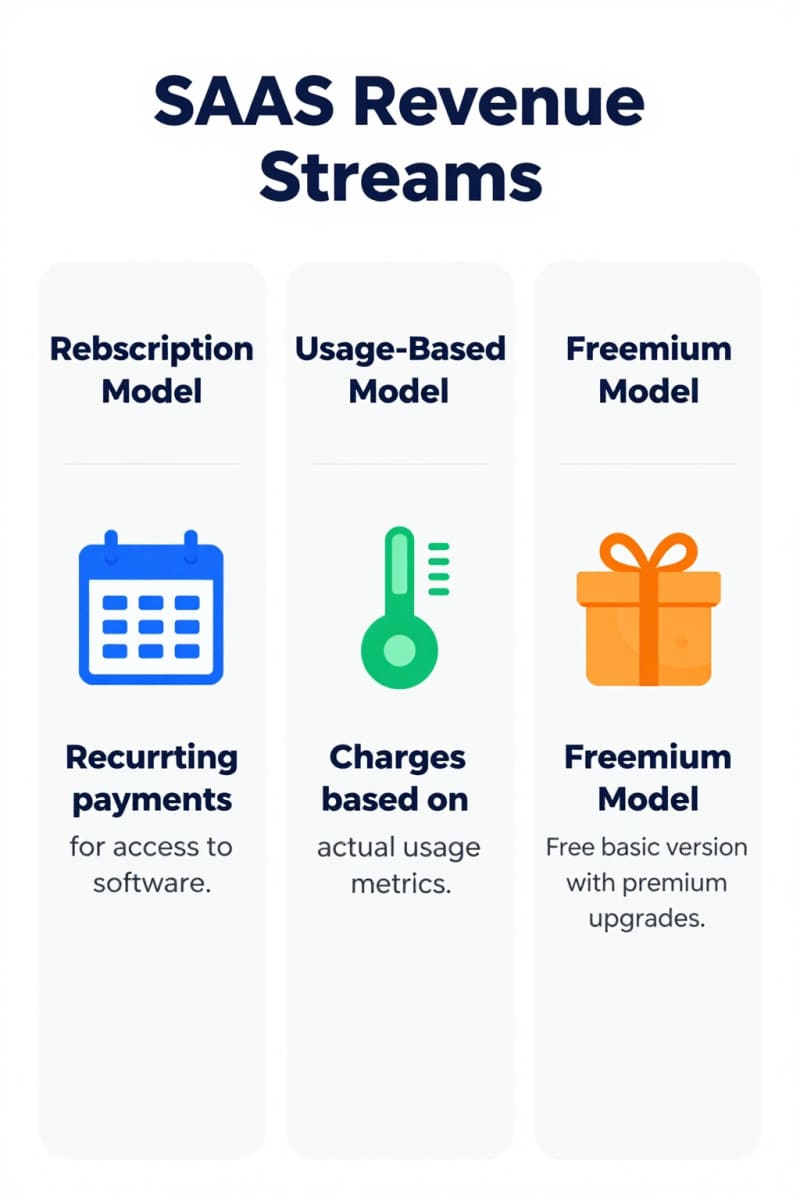
Though subscriptions are the backbone, SaaS companies use several revenue models to diversify their income streams and boost customer lifetime value. Common SaaS revenue models include:
- Freemium Model: Offering a basic version with limited features for free to encourage users to upgrade to paid plans for more functionality. This helps build a large user base which can gradually be converted to paying customers.
- Tiered Pricing Model: Providing multiple pricing levels based on features, usage limits, or user seats, allowing customization for different business sizes. For example, startups might select a lower tier with fewer features, while enterprises opt for premium tiers with advanced capabilities.
- Usage-Based Model: Charging customers based on actual usage—like API calls, storage, or data consumption—so costs align directly with perceived value. This model suits variable usage patterns and can reduce customer acquisition barriers.
- Per-User Pricing: Fees calculated based on the number of users or seats accessing the software. This model facilitates easy scaling correlating with organizational growth but may require management to avoid user sprawl.
- Hybrid Models: Mixing elements from the above models to tailor offerings and better capture revenue. A company might combine tiered pricing with usage-based charges for add-ons.
Understanding these helps SaaS providers align pricing with customer preferences and market demands, enhancing revenue predictability and flexibility.
Essential SaaS Revenue Metrics: Definitions, Calculations, and Significance (MRR, ARR, LTV, CAC, Churn)
Key performance indicators are important to monitor SaaS revenue health and steer decisions:
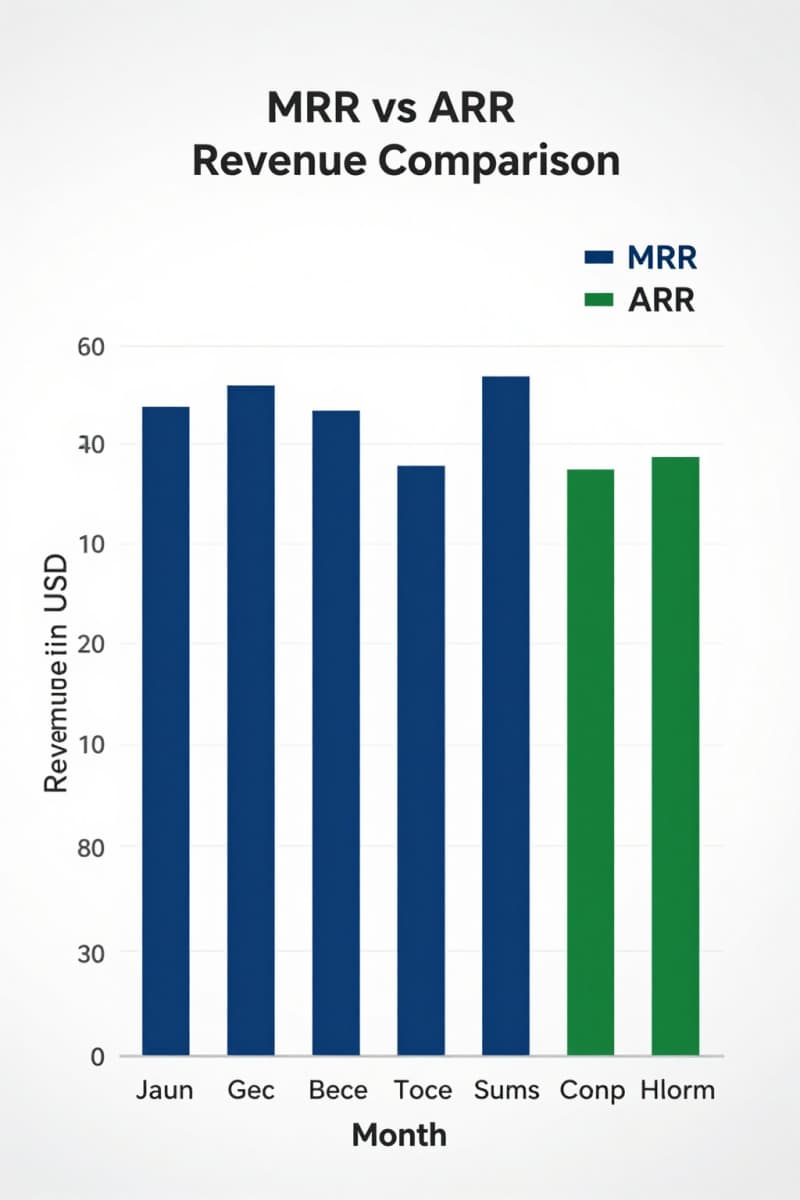
- Monthly Recurring Revenue (MRR): The normalized monthly revenue from all active subscriptions. It’s found by adding recurring revenue across customers, including new, expansion, and churned accounts adjustments. MRR enables tracking month-over-month revenue movements and underlying growth drivers.
- Annual Recurring Revenue (ARR): The yearly version of MRR, calculated by multiplying MRR by 12, useful for longer-term strategic planning and benchmarking. ARR smooths out monthly fluctuations for a broader perspective.
- Customer Lifetime Value (LTV): The total revenue expected from a customer during their relationship with the company, typically calculated as the average revenue per user (ARPU) multiplied by the average customer lifespan. LTV helps assess how much to invest in acquiring and retaining customers.
- Customer Acquisition Cost (CAC): The total expense involved in winning a new customer, including marketing, sales, onboarding, and related costs. Calculated by dividing total acquisition spend by number of new customers acquired over the same period, CAC informs profitability and payback periods.
- Churn Rate: The percentage of customers or revenue lost over a certain period, showing how effective retention is. Customer churn counts the number of customers lost, whereas revenue churn focuses on lost recurring revenue, which may be affected by upsells or downgrades.
Together, these metrics provide insights into profitability, growth potential, and operational efficiency. Monitoring their interaction is critical — for example, when CAC exceeds LTV it indicates unsustainable acquisition spending.
Navigating SaaS Revenue Recognition: Principles and Compliance (ASC 606)
Revenue recognition for SaaS companies follows accounting standards like ASC 606, which requires revenue to be recognized when performance obligations are satisfied. Usually, this means recognizing revenue ratably throughout the subscription period rather than all at once at the time of sale. This approach ensures revenue matches service delivery timing.
Key principles include identifying contract terms, determining transaction price, allocating price to performance obligations, and recognizing revenue as obligations are fulfilled. For SaaS firms, this often translates to monthly or quarterly recognition reflecting ongoing access rights.
Staying compliant with ASC 606 helps ensure accurate financial reporting and avoids compliance problems, which is vital for investor confidence and regulatory oversight. Companies must maintain detailed contract records and adjust recognition treatment when contract modifications or renewals occur.
Strategic SaaS Revenue Forecasting: Techniques and Best Practices
Forecasting SaaS revenue means predicting future income using historical data, market trends, and internal business factors. Effective forecasting methods include:
- Cohort Analysis: Watching groups of customers who started using the service during the same time frame to spot retention rates, expansion revenue, and churn patterns over time. For example, analyzing how a cohort of users acquired during a specific quarter behaves in subsequent months.
- Pipeline Management: Assessing sales funnel stages, including leads, qualified prospects, and deals in negotiation, to estimate future conversion volume and revenue. This method helps anticipate near-term upsides and bottlenecks.
- Scenario Planning: Creating best-case, worst-case, and most-likely scenarios based on variable factors such as market demand, churn spikes, or macroeconomic shifts to prepare for uncertainty.
- Leveraging MRR and ARR Trends: Using momentum in recurring revenue growth, including new subscriptions, upsells, and churn losses, as a core basis for projections.
- Incorporating Qualitative Insights: Combining sales team feedback, market intelligence, and product launch timelines with quantitative data improves forecast reliability.
By blending these quantitative methods with market insights, companies increase forecasting accuracy and better support strategic decision-making.
Optimizing and Growing Your SaaS Revenue: Strategies for Success
Increasing SaaS revenue takes a mix of operational, marketing, and customer success actions like:
- Enhancing Customer Retention: Cutting churn by improving product experience, personalized support, user onboarding, and proactive engagement.
- Upselling and Cross-Selling: Encouraging customers to upgrade or buy complementary services based on usage data and customer needs analysis.
- Pricing Optimization: Regularly revisiting pricing models, testing new tiers or discounts, and analyzing competitive positioning to maximize revenue without deterring growth.
- Efficient Acquisition Spend: Balancing CAC with LTV to ensure profitability; focusing marketing on high-converting channels and optimizing sales efficiency.
- Expanding into New Markets: Using data-driven insights to identify underserved verticals or geographic regions, and tailoring offerings accordingly.
Current Trends and the Future Outlook for SaaS Revenue in the US Market
The US SaaS market is moving fast, with trends shaping how revenue is generated. Subscription fatigue has pushed providers to create flexible plans, such as pay-as-you-go or usage-based pricing, appealing to customers seeking cost control.
AI integration in SaaS products is opening new avenues for value creation, helping automate workflows, provide insights, and increase customer stickiness, which in turn supports revenue growth.
Investor focus has shifted towards sustainable, profitable growth, encouraging SaaS companies to balance top-line growth with unit economics and churn management.
Market data shows average MRR benchmarks rising and increasing attention on managing churn and CAC for long-term financial health.
Conclusion: Mastering SaaS Revenue for Sustainable Growth
Having a solid grasp of SaaS revenue—from varied revenue models and key metrics like MRR and ARR to ASC 606 compliance and advanced forecasting—is essential for SaaS pros aiming to scale efficiently. By applying practical strategies to improve revenue streams and using insights into the evolving US market, companies can reach steady, sustainable growth. For those wanting more practical help with complex SaaS ideas, Agents Manual offers useful resources to support smarter decision-making in SaaS.